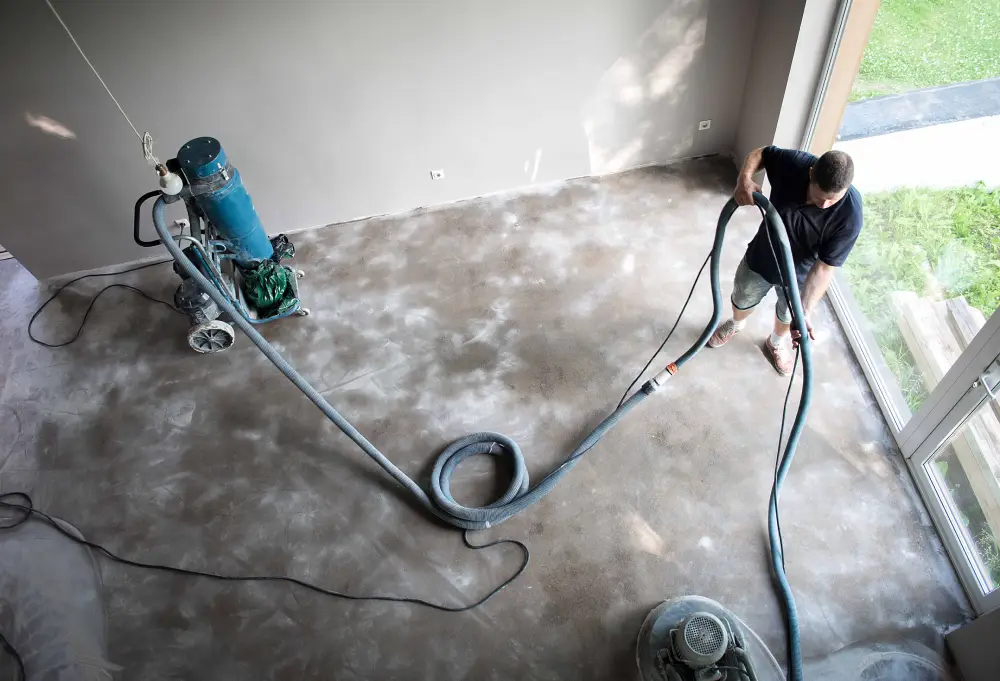
Do You Need to Grind Concrete Before Epoxy Flooring?

Short answer: yes, in almost every case. It’s a fair question though – grinding adds cost and time before the epoxy even goes down, so it’s worth understanding exactly what it does and why skipping it is such a common cause of early epoxy failure.

What Diamond Grinding Actually Does

Diamond grinding removes the top layer of the concrete – along with old paint, sealers, curing compounds, oil contamination and the weak, dusty layer on the surface known as laitance – and opens up the concrete’s pores. That open, slightly roughened profile is what gives epoxy something to mechanically key into, rather than just sitting on a smooth, sealed surface it can’t properly bond to.

What Happens If You Skip It

Coating over ungrounded concrete without addressing what’s already on or in it – old sealers, oil staining, a weak surface layer – is one of the most common causes of epoxy peeling, bubbling or delaminating within the first year or two. The coating might look fine on installation day; the problems tend to show up months later, once the floor’s been used.

Is Grinding Always Necessary?

For the vast majority of residential and commercial epoxy jobs, yes – diamond grinding is the standard preparation method. There are a small number of alternative approaches for specific site conditions (certain specialised primers, or shot blasting on some large industrial floors), but a quick sand, a pressure wash, or an acid etch on their own are not genuine substitutes for proper grinding on a floor that’s going to see real daily use.

What the Process Actually Involves

A professional grind typically starts with a coarser diamond grit to remove contamination and level out the surface, then moves to progressively finer grits for a consistent profile across the whole floor. Edges, corners and areas around fixed equipment need to be prepared by hand or with smaller tools, since the main grinding machine can’t always reach them. Proper dust extraction throughout the job matters too – concrete grinding generates fine silica dust, and a professional setup uses vacuum-attached equipment to control it rather than letting it spread through the space.

Getting your concrete properly prepped before epoxy goes down?

we’ll take a proper look before recommending a fix.

FAQs

In almost every case, yes – grinding removes contaminants and opens the concrete's surface so the epoxy can properly bond, rather than just sitting on top.

The epoxy is far more likely to peel, bubble or delaminate within the first year or two, since it hasn't properly bonded to the surface underneath.

No – they can help in specific limited situations, but they don't remove contamination or open the surface profile the way diamond grinding does for a floor that will see real daily use.

It's typically included as part of an epoxy flooring quote rather than priced separately – ask your installer to itemise it so you can see exactly what's covered.
Professional grinding uses vacuum-attached equipment for dust control, so it's far less messy than DIY grinding without proper extraction.

Get a Free Quote

Ready to bring your vision to life? Contact us today for a free quote and let's get started!

0403 234 777

Consult with Expert