UV Fading and Outdoor Epoxy: What Melbourne Homeowners Need to Know

Last post, we covered why a standard indoor epoxy system isn’t built for outdoor sun exposure. This time we’re going deeper on the fading itself – how to spot it, what Melbourne’s climate specifically means for an outdoor floor, and what your options are if a patio’s already showing UV damage.

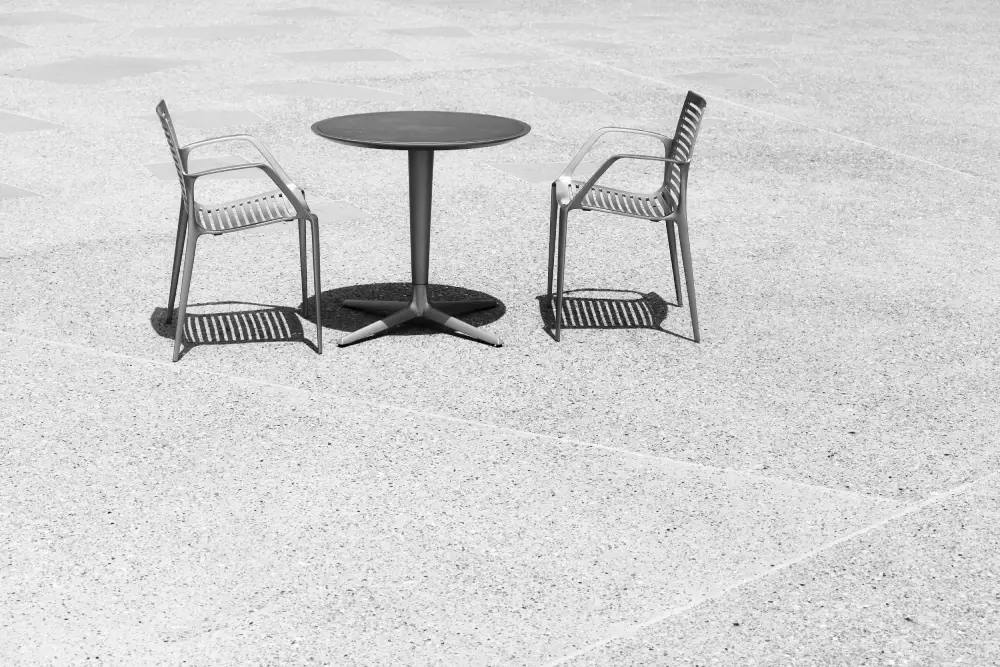
UV-faded outdoor epoxy flooring compared with a UV-stable finish.

A Quick Recap: Why UV Fading Happens

Standard epoxy resin isn’t UV-stable, so direct sunlight gradually breaks the coating down through photo-oxidation – we cover the chemistry in more detail in our previous post. The short version: without a UV-stable topcoat, an outdoor epoxy floor will fade and chalk, and it’s only a matter of time.

How to Tell If Your Outdoor Epoxy Has UV Damage

The earliest sign is usually a subtle yellowing or amber tint creeping into a floor that was originally clear, grey or a cooler tone. As it progresses, you’ll notice a chalky, powdery residue on the surface – wipe a white cloth across it and it’ll pick up colour. In more advanced cases, the surface can start to feel slightly rough or gritty underfoot, and the gloss level flattens out noticeably compared to when it was installed.

Melbourne’s Climate and Outdoor Epoxy

Melbourne gets long stretches of harsh, direct UV through summer, and an exposed north or west-facing patio can cop many hours of direct sun a day in peak season. That’s exactly the environment a UV-stable topcoat is designed for – and exactly the environment where skipping one shows up fastest. A shaded, south-facing courtyard will fade more slowly than a fully exposed pool deck, but neither is immune without the right system.

Can a Faded Outdoor Epoxy Floor Be Fixed?

If the base coat and concrete underneath are still sound, a faded or chalky outdoor epoxy floor can often be refreshed by preparing the surface and applying a genuinely UV-stable topcoat – effectively fixing the mistake that let it fade in the first place. If the coating has progressed to flaking or delamination, a fuller strip-back and recoat is usually the better long-term fix rather than coating over a failing surface.

Preventing Future Fading

Beyond specifying a proper UV-stable topcoat from the start, a pergola, shade sail or umbrella over the most exposed section of a patio genuinely reduces cumulative UV exposure over the years. A satin or matte topcoat sheen also tends to show early UV wear less obviously than a very high-gloss finish, simply because the change in reflectivity is less visually dramatic as it happens.

Add a clear next-step CTAUse Australian spelling consistently

Got a faded patio floor, or planning a new one?

We’ll assess what you’ve got or spec a system built to handle Melbourne sun.

FAQs

Look for yellowing or an amber tint, a chalky residue that rubs off on a cloth, a rougher surface feel, and a flattened gloss level compared to when it was installed.
Often yes, if the base coat and concrete are sound – preparing the surface and applying a genuinely UV-stable topcoat can restore it. More advanced flaking usually needs a fuller recoat.
Long hours of direct summer sun on north or west-facing patios accelerates UV damage – exactly the conditions a UV-stable topcoat is designed to handle.

Not in terms of underlying UV resistance, but a matte or satin sheen tends to show early wear less obviously than a high-gloss finish.

Yes – reducing direct sun exposure over the most exposed areas genuinely slows cumulative UV wear over time.

Get a Free Quote

Ready to bring your vision to life? Contact us today for a free quote and let's get started!

0403 234 777

Consult with Expert