Epoxy Flooring vs Polished Concrete vs Tiles: Which Is Right for You?

Last time on the blog, we broke down what epoxy flooring actually costs in Melbourne. This time we’re stepping back a level, because cost only matters once you’ve worked out whether epoxy is even the right finish for your space in the first place – or whether polished concrete or tiles would suit you better. Here’s how the three stack up where it actually matters: day-to-day durability, upkeep, look, and how long each one really lasts.

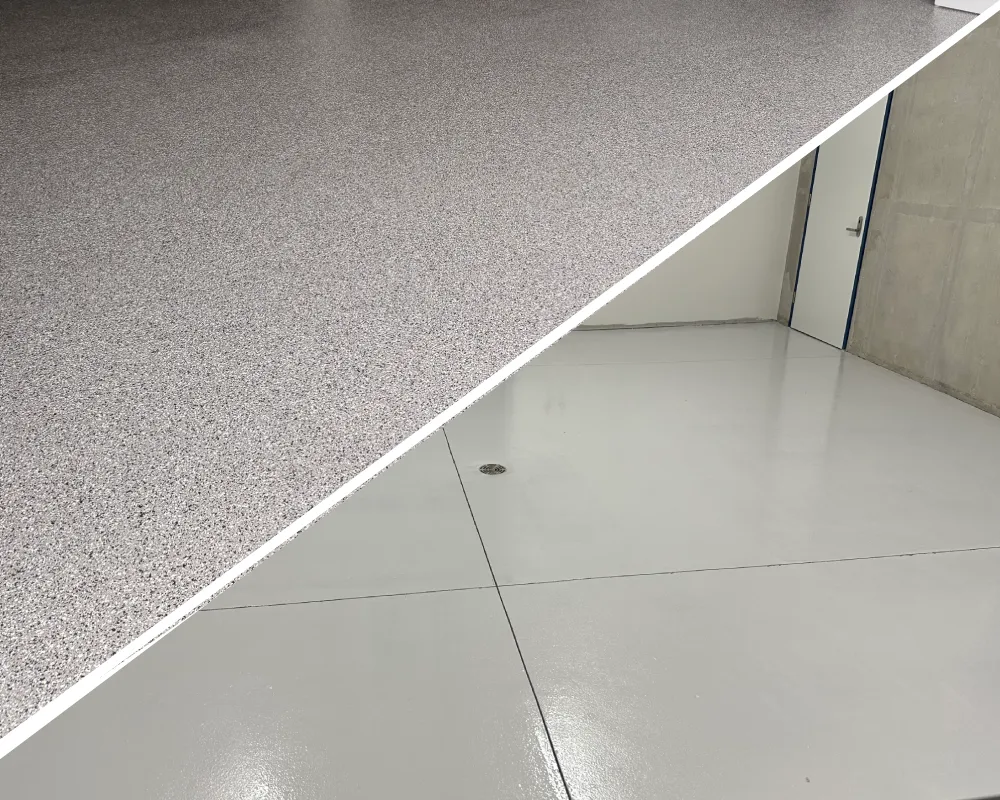
Comparison of epoxy, polished concrete and tiled flooring finishes.

Durability: Which Flooring Holds Up Best?

Epoxy forms a hard, bonded layer over the concrete that resists impact, abrasion and chemical spills – which is why it’s the default choice for garages, workshops and warehouses. Polished concrete is also tough, but it’s more porous than epoxy and can still stain from oil or acidic spills if it isn’t sealed well. Tiles are hard-wearing individually, but grout lines are the weak point – they crack, stain and can lift over time, especially under vehicle weight.

Maintenance: What Does Day-to-Day Upkeep Look Like?

Epoxy is the lowest-maintenance of the three – a sweep and an occasional mop is usually all it needs, and it resists oil, chemicals and most stains. Polished concrete needs periodic resealing to keep its resistance up. Tiles need regular grout cleaning and eventually re-grouting, which is the maintenance job most homeowners underestimate when they choose tiles for a garage or workshop.

Look and Style Options

Tiles offer the widest range of colours and patterns out of the box. Polished concrete gives a natural, industrial look with limited colour control. Epoxy sits in between – solid colours, flake blends or a metallic finish give you real design flexibility without the grout lines, and we cover the specific style options in more detail elsewhere on the blog.

Cost and Lifespan: The Bigger Picture

We covered detailed epoxy pricing in our last post – as a rough guide, epoxy sits above painted concrete but below fully tiled floors on upfront cost. Where epoxy tends to win is total cost over time: a well-installed epoxy floor with proper surface prep can last well over a decade with minimal upkeep, while tiled floors rack up ongoing grout maintenance and polished concrete needs periodic resealing to maintain its resistance to stains.

Slip Resistance: An Important Practical Factor

All three surfaces can be finished to be more slip-resistant – textured tiles, a honed (rather than high-gloss) polished concrete finish, or an anti-slip additive broadcast into the epoxy topcoat. If slip resistance is a priority for your space, it’s worth discussing the finish options directly with your installer rather than assuming any one material is automatically safer than the others.

Not sure which finish suits your space?

we’ll talk through what fits your floor, your budget and how you actually use the space.

FAQs

Both are tough, but epoxy resists staining and chemical spills better because it forms a non-porous layer over the concrete rather than sitting in it.
Epoxy is generally the better fit for garages – no grout lines to crack or stain under vehicle weight, and lower ongoing maintenance.
Yes – polished concrete typically needs periodic resealing to maintain its stain and moisture resistance.
Any of the three can be finished for slip resistance – a textured tile, a honed concrete finish, or an anti-slip additive in the epoxy topcoat.
A well-installed epoxy floor with proper prep typically outlasts a tiled floor's grout lines, which are usually the first thing to fail.

Get a Free Quote

Ready to bring your vision to life? Contact us today for a free quote and let's get started!

0403 234 777

Consult with Expert