Is Epoxy Flooring Good for Kitchens? Pros, Cons and Maintenance

Epoxy has a strong reputation in garages and workshops, and more homeowners are now asking whether it makes sense inside the kitchen too. It genuinely can – but a kitchen makes some different demands to a garage floor, and it’s worth knowing both sides before committing.

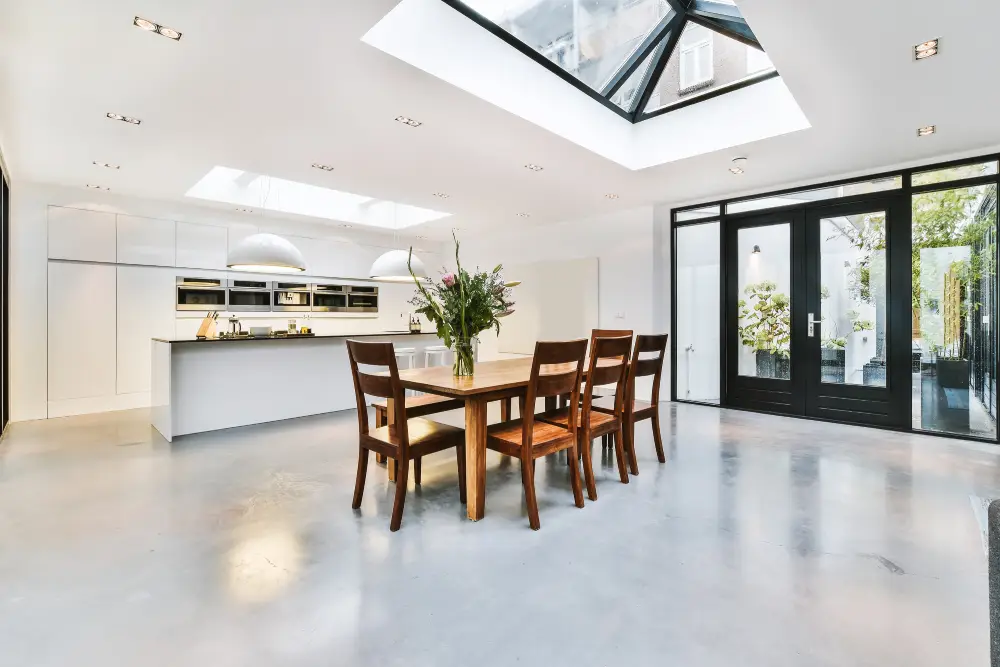
Epoxy flooring installed in a residential kitchen.

What Makes Epoxy a Good Fit for Kitchens

Epoxy forms a continuous, joint-free surface with nowhere for food, grease or moisture to get trapped, unlike tiled floors with grout lines. It’s naturally resistant to oil, acidic spills and most cleaning chemicals, and it stands up well to dropped pots, pans and cutlery without chipping the way some tiles can. It’s also easy to keep clean day to day – a smooth surface with no grout lines to scrub.

The Trade-Offs to Consider

A high-gloss epoxy finish can be slippery when wet, and kitchens see plenty of spills – so a textured or matte finish with some slip resistance built in is worth discussing rather than assuming any epoxy floor is automatically kitchen-ready. Epoxy is also a hard, unforgiving surface underfoot compared to timber or vinyl, which some people notice standing on for long cooking sessions. And because it’s a continuous coating, a small area of damage generally can’t be patched invisibly – it’s more of an all-or-nothing floor than a tiled one where you can occasionally replace a single tile.

Keeping an Epoxy Kitchen Floor Looking Its Best

Day-to-day care is straightforward: sweep or vacuum regularly, mop with warm water and a pH-neutral cleaner, and wipe up oil or acidic spills (tomato sauce, vinegar, citrus) reasonably promptly rather than letting them sit for hours. Avoid abrasive scouring pads, which can dull the topcoat’s gloss over time.

Add a Clear Bottom-Line RecommendationMake the Kitchen Benefits More Specific

Considering epoxy for your kitchen?

We’ll talk through finishes that balance the look you want with the grip you need.

FAQs

Yes, for most kitchens – it's hygienic, easy to clean and stands up well to spills and dropped items, provided the right finish is chosen for grip underfoot.

A high-gloss finish can be when wet – a textured or matte finish with slip resistance built in is the better choice for a kitchen.
Yes – its continuous, joint-free surface has no grout lines for food or moisture to get trapped in, unlike tiled floors.

Sweep or vacuum regularly and mop with warm water and a pH-neutral cleaner, avoiding abrasive scouring pads.

Not invisibly, generally – because it's a continuous coating, damage usually means recoating a larger section rather than replacing a single tile.

Get a Free Quote

Ready to bring your vision to life? Contact us today for a free quote and let's get started!

0403 234 777

Consult with Expert