Epoxy vs Garage Floor Paint: What's the Real Difference?

Garage Epoxy Flooring Last post, we looked at how long garage epoxy flooring actually lasts. That naturally raises the next question we get asked all the time: why not just paint the garage floor instead? Floor paint is cheaper and easier to find at any hardware store, so it’s a fair question. Here’s what actually separates the two, and why they behave so differently once a car’s parked on them.

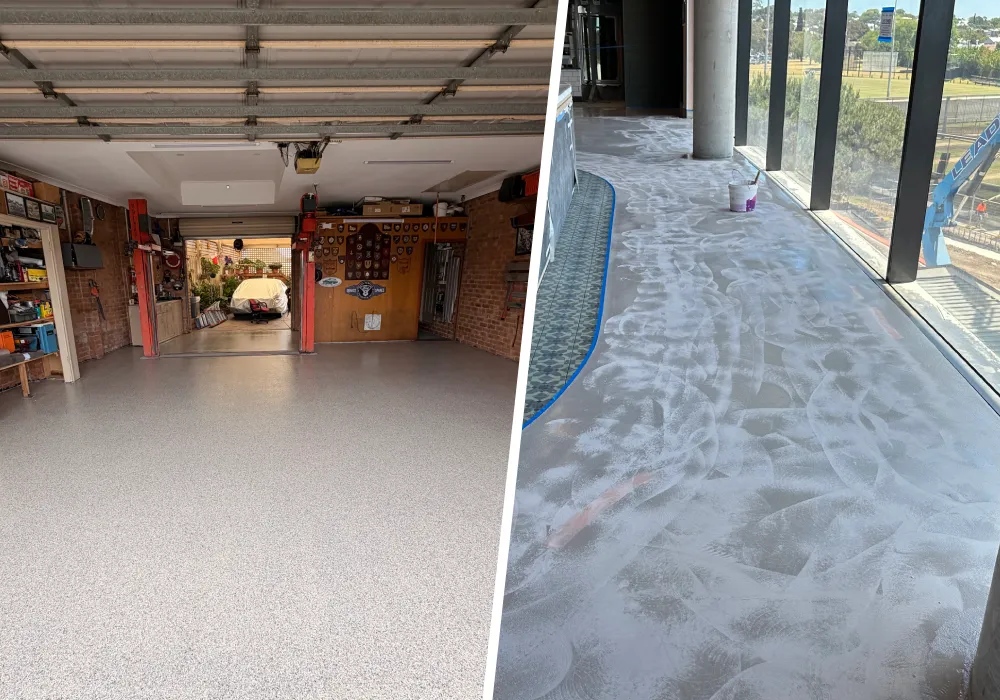
Garage floor paint peeling compared with an intact epoxy floor finish.

What’s the Difference Between Epoxy and Garage Floor Paint?

Garage floor paint is exactly that – a paint, applied in a thin film that sits on top of the concrete surface. True epoxy flooring is a two-part resin and hardener system that chemically reacts and cures into a hard, thick, bonded layer rather than just a painted film. That difference in how each one physically sits on the concrete is what drives almost every other difference between them.

Durability: Why Paint Fails Where Epoxy Doesn’t

The classic failure point for garage floor paint is hot tyre pickup – after a long drive, a hot tyre can soften the paint film enough that it lifts and sticks to the tyre when the car moves again. Paint is also more vulnerable to peeling where there’s trapped moisture in the slab, since it doesn’t bond into the concrete the way epoxy does. Epoxy’s thicker, chemically-bonded layer handles vehicle weight, dropped tools and daily foot traffic with far less risk of lifting or peeling.

Cost Comparison: Cheaper Now vs Cheaper Over Time

Floor paint is the cheaper option upfront, and a DIY kit from a hardware store is the cheapest option of all. The trade-off is frequency – floor paint typically needs reapplying every year or two in a well-used garage, while a professionally installed epoxy system can go a decade or more between recoats. Once you account for repeat paint jobs over the years, epoxy is usually the better long-term value, not just the tougher one.

Application and Cure Time

Paint is quick – it dries to the touch fast and a DIY job can be done over a weekend. Epoxy needs proper surface preparation (typically diamond grinding), correct mixing of the resin and hardener, and adequate cure time before the floor can take vehicle traffic. It’s a bigger job upfront, which is exactly why it holds up so much better afterwards.

Which One Should You Choose?

If you just want a quick, low-cost refresh on a floor you’re not too fussed about, paint can do the job for a year or two. If you want a garage floor that looks good and performs well for the long haul – daily driving, tools, the odd oil spill – epoxy is the more durable option, and it typically saves you money over time despite the higher initial cost.

Weighing up paint versus epoxy for your garage?

We’ll help you work out what’s worth it for your situation.

FAQs

For most garages, yes – epoxy resists hot tyre pickup, chemical spills and daily wear far better than a painted finish, and lasts much longer between redos.
Most commonly from hot tyre pickup, moisture trapped under the paint film, or the surface not being properly prepared before painting.
Upfront, yes – but it typically needs reapplying every year or two, so the cost gap narrows or reverses over several years.
You can, and it's a reasonable option for a quick, low-cost refresh – just expect a shorter lifespan than a professionally installed epoxy system.
Floor paint often needs reapplying within a year or two of regular use; a properly installed epoxy system can last well over a decade.

Get a Free Quote

Ready to bring your vision to life? Contact us today for a free quote and let's get started!

0403 234 777

Consult with Expert